

Revolutionizing E-commerce: The Role of Artificial Intelligence in Online Retail
The global e-commerce sector is currently navigating a period of structural reconfiguration driven by the rapid maturation and integration of artificial intelligence.
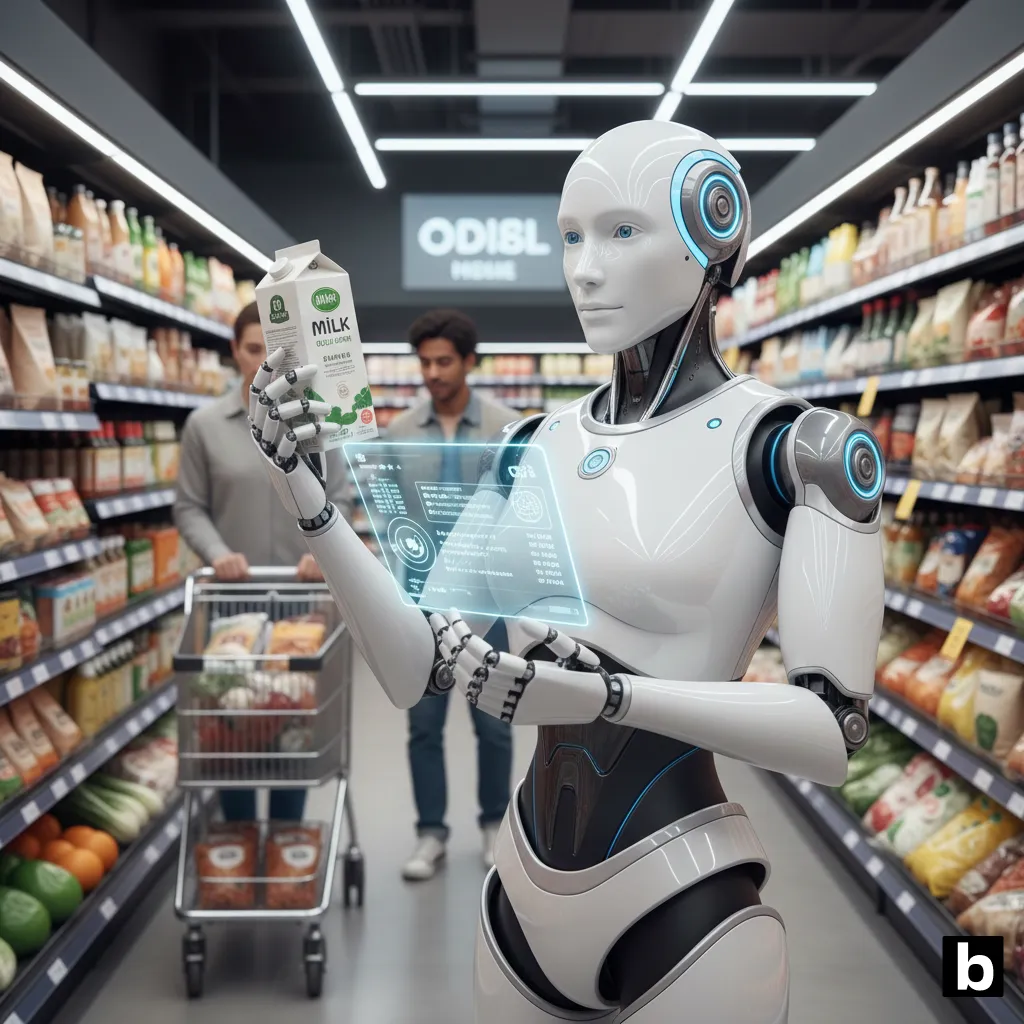
As of 2025, the AI-enabled e-commerce market has reached a valuation of $8.65 billion, with aggressive projections suggesting a rise to $22.60 billion by 2032, reflecting a compound annual growth rate of 14.60%. This expansion is characterized by a fundamental shift from traditional digital storefronts toward autonomous, intelligent ecosystems capable of self-optimization. The current state of adoption reveals that 78% of organizations have integrated AI into at least one core business function, and 84% of e-commerce executives now categorize AI as their primary strategic priority. This institutional commitment is validated by measurable performance indicators, including an average revenue increase of 10% to 12% for early adopters and a projected 59% enhancement in overall profitability across the retail sector by 2035.
Current Trends and Technological Archetypes
The evolution of e-commerce technology is defined by a transition from reactive, rule-based systems to proactive, agentic architectures. This shift is not merely incremental but represents a total reimagining of the merchant-consumer interface and back-end logistical frameworks.
The Surge of Generative and Agentic AI
The most significant contemporary trend is the explosive growth of generative AI traffic to retail sites, which surged 4,700% year-over-year. Beyond simple content generation, the industry is entering the era of "agentic commerce," where AI systems act as autonomous digital entities capable of reasoning, planning, and executing multi-step tasks with minimal human intervention. While approximately 23% of organizations are already scaling agentic AI systems, another 39% are actively experimenting with these capabilities. These agents are moving from "answer and deflect" models to "plan and execute" paradigms, handling complex workflows such as processing refunds, updating internal CRM tickets, and managing cross-platform inventory synchronization.
By 2028, it is projected that 90% of B2B procurement will be intermediated by AI agents, facilitating over $15 trillion in global spend. This shift necessitates a new digital marketing strategy known as Agent Engine Optimization (AEO), where product data must be structured to be machine-readable for AI agents rather than just human shoppers.
| Adoption Category | Current State (2025) | Future Projection (2027-2030) | Source |
| Global AI E-commerce Market | $8.65 Billion | $22.60 Billion (2032) | |
| Generative AI Usage | 71% of organizations | Ubiquitous Integration | |
| Agentic AI Implementation | 23% Scaling | $190 Billion Revenue Impact (2030) | |
| Small Business Adoption (US) | 39% | 55% | |
| B2B Spend via AI Agents | Negligible | $15 Trillion (2028) |
Core Technologies: Computer Vision and NLP
The technological foundation of modern retail rests upon the trifecta of Natural Language Processing (NLP), Computer Vision, and Machine Learning. NLP allows systems to interpret, understand, and respond to human language in a contextually aware manner, powering sophisticated virtual assistants that can detect sentiment and intent. Computer vision provides the visual intelligence required for image-based product discovery, allowing machines to identify objects within user-uploaded photos or analyze real-world environments for augmented reality applications.
These technologies are increasingly combined into multimodal ecosystems. For instance, a retail brand might utilize computer vision to recognize products on a shelf, NLP to analyze customer feedback regarding those items, and generative AI to produce targeted marketing content based on the resulting insights.
Adoption Dynamics and Regional Variance
The adoption of AI is not uniform across the global landscape. North America remains a dominant player, holding 32% of the AI in retail market share. However, the Asia-Pacific region is experiencing rapid expansion, with a projected CAGR of 21.2% through 2033. In terms of national scale, China (58%) and India (57%) are deploying AI at a significantly higher rate than the United States, where only about 25% of companies have fully adopted the technology.
There is also a notable gap between large enterprises and SMEs. Large European enterprises show an adoption rate of 41.2%, whereas small firms linger at 11.2%. This disparity is largely driven by the high cost of custom infrastructure and a lack of specialized engineering talent; in 2024, less than 10% of APAC small businesses had employees with AI engineering experience.
Enhancing Customer Experience and Engagement
AI is fundamentally altering the consumer journey, transforming it from a linear search-and-purchase model into a dynamic, personalized dialogue.
Hyper-Personalization and Recommendation Engines
Standard personalization has evolved into hyper-personalization, where AI analyzes vast arrays of behavioral signals, including session-level context, historical purchase data, time of day, and even mood inference. These systems generate substantial financial impact, often producing 40% more revenue than non-personalized strategies. Statistics reveal that 91% of consumers prefer brands that offer personalized experiences, and 78% are more likely to make repeat purchases from such businesses.
Recommendation engines now account for 35% of Amazon's total revenue, demonstrating the maturity of this application. These engines utilize advanced algorithms such as collaborative filtering (recommending items based on similar users) and content-based filtering (suggesting items similar to those a user has interacted with). When combined with deep learning, these models can identify complex patterns that traditional statistical methods overlook, leading to a 300% increase in revenue for some retailers.
Conversational Commerce and Virtual Assistants
The maturation of conversational AI has led to the development of "shopping concierges" that offer support across every stage of the journey. AI-powered chatbots now resolve 93% of customer questions without human intervention and have been shown to recover 35% of abandoned carts through proactive engagement.
By 2026, AI is expected to drive 95% of all customer interactions. These assistants are capable of natural, context-aware conversations, moving beyond simple Q&A to help users troubleshoot issues, compare technical features, and navigate returns. Sephora, for instance, utilizes AI to analyze real-time browsing history to tailor homepage content and loyalty offers, resulting in a 40% drop in response times and significant increases in customer satisfaction scores.
Visual Search and Augmented Reality
Visual search technology allows consumers to bypass the limitations of text-based queries by uploading photos to find matching or similar products. This "visual discovery" is a critical conversion gainer, with early adopters witnessing a 20% increase in conversion rates and a 25% boost in average order value. Major platforms are reporting massive usage: Google Lens processes 20 billion visual searches monthly, and Pinterest Lens has seen over 850 million uses in the first half of 2025.
| Retailer | AI Application | Documented Outcome | Source |
| Sephora | AR/AI Virtual Try-on | 35% rise in skincare sales; 40% faster response times | |
| ASOS | Fit Assistant | 13% boost in conversion rates | |
| Amazon | Lens Live | Instant real-time product matches via camera | |
| Office.co.uk | Personalization Engine | 8.6% increase in add-to-cart rates | |
| Lululemon | Predictive Profiling (AgilOne) | 40% growth in retail (2020) | |
| Stitch Fix | Style Shuffle (Latent Style) | High repeat purchase rates via billions of ratings |
Augmented Reality (AR) further complements this by allowing "virtual trials," where consumers can visualize apparel, cosmetics, or furniture in their own space before purchasing. Research indicates that 76% of consumers prefer brands offering AR experiences, and IKEA has observed a 20% decline in returns related to sizing issues after implementing AR-based furniture placement tools.
Driving Business Growth and Operational Efficiency
Beyond the customer interface, AI functions as the "core operating system" for back-end retail operations, streamlining everything from procurement to the final mile of delivery.
Supply Chain Management and Demand Forecasting
Traditional supply chain planning is often reactive and hampered by fragmented data silos. AI transforms this into a predictive, integrated business planning (IBP) framework. By analyzing historical data alongside external signals—such as weather patterns, geopolitical events, and social media trends—AI models can reduce demand forecasting errors by 20% to 50%.
Building an AI-powered supply chain requires a structured, eight-step process:
-
Data Audit: Auditing sales history, lead times, and customer patterns to ensure a clean foundation.
-
Goal Definition: Setting clear targets for inventory turnover and availability by region.
-
Tool Selection: Choosing software that supports auto-replenishment and integrates with existing ERPs.
-
System Integration: Breaking down silos to unify procurement, logistics, and sales data.
-
Model Training: Incorporating external signals to discern complex market patterns.
-
Simulation: Using AI to test inventory scenarios and move stock across networks virtually before physical execution.
-
Automation: Enabling automated reordering and exception handling for stockouts or surpluses.
-
Refinement: Continuously tracking KPIs and using AI to identify the "why" behind missed targets.
This level of optimization has led to measurable results: businesses utilizing predictive analytics report up to 75% fewer stockouts and a 20% reduction in inventory carrying costs.
Warehouse Automation and Order Fulfillment
In the warehouse, AI-powered robotics are performing tasks at speeds impossible for humans. Systems like Amazon’s Pegasus and Xanthus robots recognize, pick, and distribute items multiple times faster than manual processes. AI-powered robotic automation cut packaging and selection durations by 30% to 40% while simultaneously increasing precision and reducing human error.
For order fulfillment, RPA bots are being deployed to handle the iterative, low-value tasks of order entry and invoicing. One mid-sized retailer reported a 30% reduction in order processing time and a 50% decrease in manual errors after integrating RPA with their legacy systems. In the manufacturing sector, AI bots have reduced the "time to value" of orders from minutes to seconds.
Reverse Logistics and Returns Management
Returns management is a significant profit drain, with online return rates reaching as high as 17.6%, representing $351 billion in lost sales. AI-driven reverse logistics addresses this through automated inspection and assessment. Advanced image recognition systems capture high-resolution images of returned items and compare them against a database of standards to instantly determine resale eligibility.
AI disposition engines utilize real-time data to make allocation decisions, assessing resale price, processing costs, and transportation fees to route the return to the most cost-effective facility. This automation can cut returns processing time by 75% and ensures that maximum value is recovered through data-driven intelligent pricing.
| Operational Metric | AI Impact | Source |
| Forecast Accuracy | 20-50% Error Reduction | source |
| Logistics Savings | 5-20% through optimization | source |
| Inventory Surplus | 20% Reduction | source |
| Returns Cycle Time | 75% Reduction | source |
| Order Processing Time | 30% Improvement (RPA) | source |
| Customer Resolution Time | 38 Hours reduced to 5.4 Minutes | source |
Challenges, Limitations, and Ethical Considerations
The integration of AI is not without substantial technical and ethical hurdles. The transition from pilot programs to scaled impact remains a significant challenge for most organizations.
The Data Readiness Gap
The primary technical barrier to AI adoption is the lack of a reliable data foundation. While 91% of professionals agree that a trusted data foundation is essential, only 55% believe their own organization's foundation is reliable. Furthermore, only 10% of respondents feel their organizations are "completely ready" to adopt AI.
To address this, data leaders are focusing on cleaning data (71%), breaking down silos (66%), and implementing Master Data Management (MDM) (44%). High-quality data that is accurate, standardized, and non-duplicated is a non-negotiable requirement for meaningful AI adoption.
Ethics, Bias, and the EU AI Act
The rapid deployment of AI has outpaced the establishment of oversight mechanisms; only one in five companies currently has a mature model for the governance of autonomous AI agents. This creates risks regarding algorithmic bias and ethical manipulation. Gartner predicts that by the end of 2026, "death by AI" legal claims will exceed 2,000 due to insufficient risk guardrails in high-stakes sectors.
The European Union's AI Act is the first comprehensive attempt to regulate these risks. It prohibits practices such as "harmful AI-based manipulation," which uses subliminal techniques to distort consumer behavior. The Act also bans AI that exploits vulnerabilities related to age or socio-economic status.
For e-commerce, the Act designates certain systems as "high-risk," including those used for biometric identification or emotion recognition in the workplace. Companies must ensure their AI systems are transparent, and for "limited risk" systems like chatbots, they must disclose to users that they are interacting with AI.
| Risk Level (EU AI Act) | Definition | E-commerce Example | Requirement |
| Unacceptable | High risk to fundamental rights | Subliminal behavioral manipulation | Prohibited / Banned |
| High Risk | Significant impact on safety/rights | Biometric identification systems | Strict audits & documentation |
| Limited Risk | Lower risk, transparency focus | Customer service chatbots | Mandatory AI disclosure |
| Minimal Risk | Little to no risk | Spam filters, simple filters | No specific obligations |
Talent and Infrastructure Constraints
The AI skills gap remains the most cited barrier to integration. Many organizations are attempting to bridge this through education rather than total role redesign, yet 30% of enterprises expect to have dedicated roles for coaching and managing AI agents by 2026. Furthermore, the technical requirements for training foundation models are immense, requiring petabytes of data and thousands of graphics processing units (GPUs), often costing millions of dollars.
Future Prospects and Predictions
The future of e-commerce is trending toward a "frictionless reality" where the boundaries between the digital and physical worlds become increasingly blurred.
Blockchain-Based AI and Transparency
Blockchain is emerging as a critical tool for enhancing the transparency and security of AI systems. By providing an immutable, decentralized ledger, blockchain ensures that transaction data is tamper-proof and auditable. In e-commerce, this synergy allows for real-time tracking of product origins, combating counterfeit goods and verifying ethical sourcing.
AI-driven solutions can detect fraud on these blockchains in real-time, predicting vulnerabilities and automating smart contracts for improved efficiency. Some startups are already leveraging this: Moso is a Web3 shopping assistant that rewards users with cryptocurrency, while CheckoutDAO focuses on cross-border payment security.
The Maturation of Spatial Computing
By 2026, the industry will have moved from a device acquisition phase to a utilization phase driven by recurring software subscriptions and immersive content platforms. Major hardware updates, such as the refresh of the Apple Vision Pro and the launch of Samsung’s Galaxy XR, are making high-quality mixed reality more accessible. These platforms will support "visual trials" that feel as engaging as physical interactions, potentially becoming the primary method for discovering furniture, apparel, and beauty products.
Zero-Click Commerce and Self-Service Portals
As AI agents become more autonomous, the industry is moving toward "zero-click commerce." Shoppers may no longer need to visit traditional websites; instead, their personal AI agents will compare prices, evaluate features, and complete purchases on their behalf based on predefined preferences. Google's "AI Mode" and "Buy for me" button functionality are early indicators of this shift.
Concurrently, self-service will become the standard for customer support. 77% of e-commerce customers already prefer self-service portals, and by 2026, AI is expected to handle 80% of routine interactions fully.
The Strategic Shift Toward Profitability and Trust
In 2026, the "growth-at-all-costs" model is expected to give way to a focus on profitability and genuine consumer trust. With rising operational expenses and squeezed margins, retailers will use AI not just for sales, but for sustainability and waste reduction. Building strong "trust signals"—such as verified product reviews and transparent data practices—will be essential for brands looking to be selected by the AI assistants that will soon mediate the majority of the market.
Conclusion
The integration of artificial intelligence into e-commerce represents the most significant paradigm shift in retail history since the inception of the internet. The data indicates that AI is no longer a peripheral innovation but has become the core operational infrastructure for competitive enterprises. From the hyper-personalization of the customer journey to the autonomous optimization of the global supply chain, AI is delivering measurable impact in revenue growth and operational efficiency.
However, the realization of this potential is contingent upon overcoming significant hurdles. Organizations must bridge the "data readiness gap" by building trusted foundations and breaking down functional silos. They must also navigate an increasingly complex regulatory landscape, where ethics and transparency are becoming as important as technical capability.
The move toward agentic commerce and spatial computing suggests a future where shopping is as intuitive as a conversation. As AI agents begin to take a leading role in procurement and discovery, the brands that succeed will be those that prioritize data integrity, ethical governance, and the seamless integration of human-centric design with machine-driven efficiency. The transformation is already underway; for retailers, the choice is no longer whether to adopt AI, but how to lead within an AI-first economy.